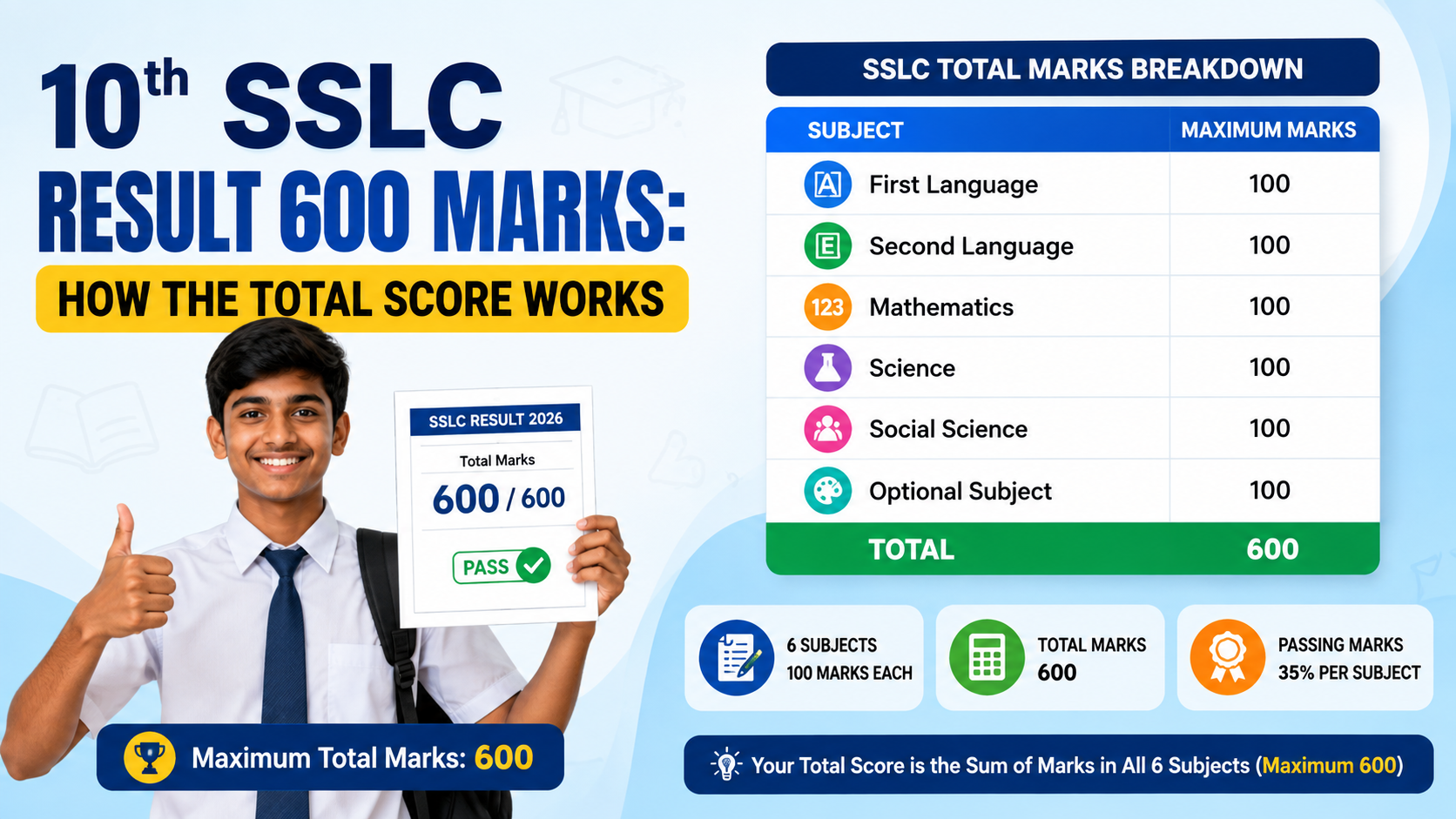
A search for 10th result 600 marks usually means one thing: you want to know whether 600 is an excellent score, what percentage it represents, and how the total has been calculated.
The first rule is simple: 600 marks do not have one fixed meaning across India. “SSLC” is used by different state boards, and every board can use a different subject structure, maximum total, grading method and result format. A score of 600 is meaningful only when you know the maximum marks printed or prescribed for that specific examination.
This guide explains how to read a 10th SSLC result correctly, calculate the percentage, identify which marks count towards the total, and verify a result through the appropriate official board portal.
Key Takeaways
- A 600-mark score must always be read against the board’s official maximum marks.
- Use the total shown on the official marks card or result page—not a total mentioned on social media or coaching websites.
- Percentage is calculated as
(marks obtained ÷ maximum marks) × 100. - Subject marks, practical/internal assessment marks and additional subjects may be treated differently by different boards.
- An online result is usually provisional; the original marks card issued by the board or school remains important.
- Never assume that all Class 10 or SSLC boards follow a 600-mark system.
What Does “10th Result 600 Marks” Actually Mean?
“600 marks” can refer to two very different things:
- Marks obtained: A student has scored 600 marks in the examination.
- Maximum marks: A particular board or school scheme may assess students out of 600 marks.
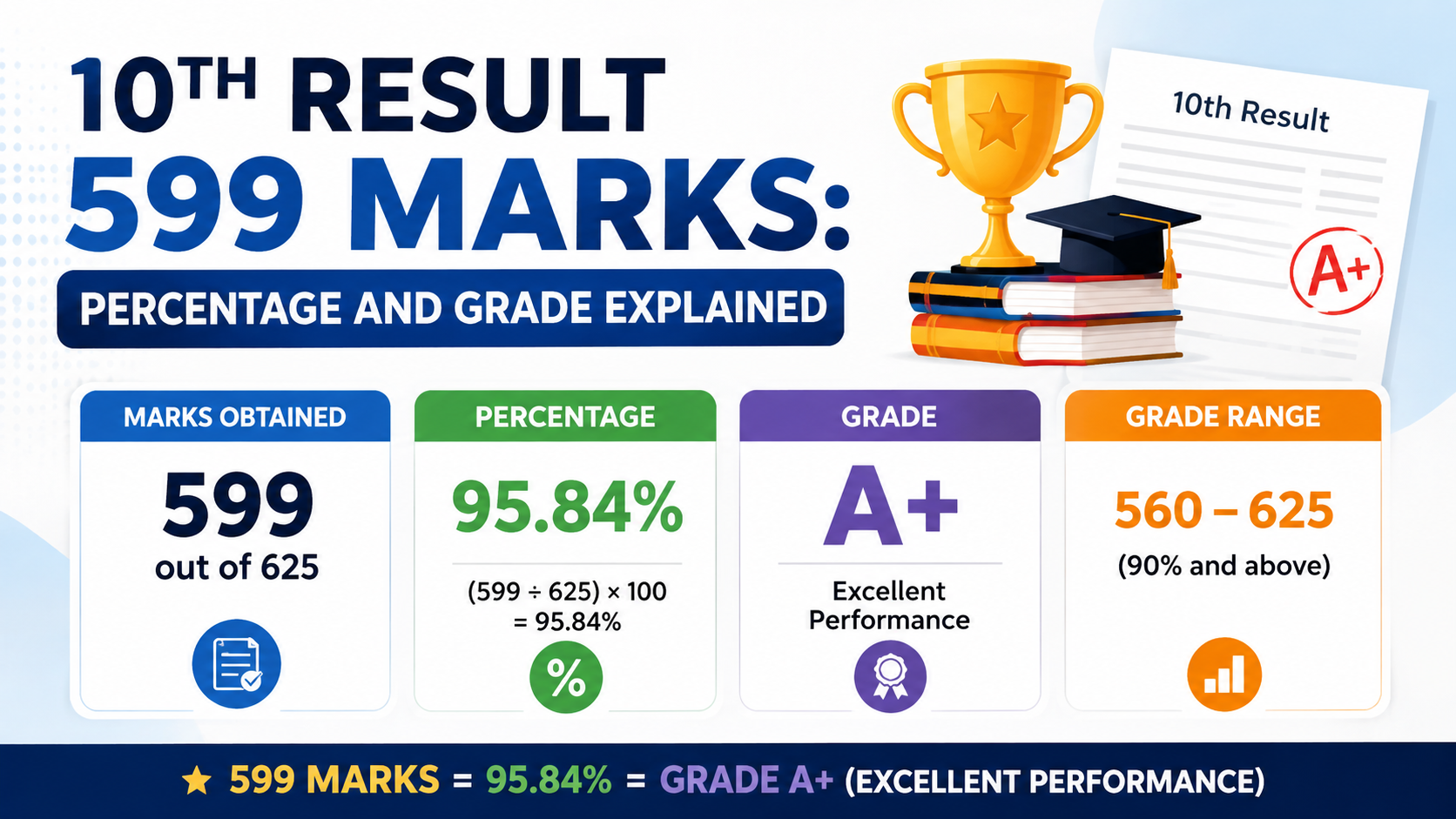
These are not interchangeable. For example, if a student obtains 600 marks out of 625, the result is exceptional. If the student obtains 600 out of 700, the percentage is different. If the board’s maximum total is 500, a score of 600 is obviously not possible under that standard total.
The correct interpretation depends on the following details shown on the marks card:
- Name of the board
- Examination year and session
- Subjects listed
- Maximum marks for each subject
- Marks obtained in each subject
- Grand total or aggregate
- Result, grade or pass status
- Whether an additional subject is included in the aggregate
Do not rely only on a headline such as “600 marks in 10th.” Always inspect the official score format.
Why SSLC Totals Differ Across India
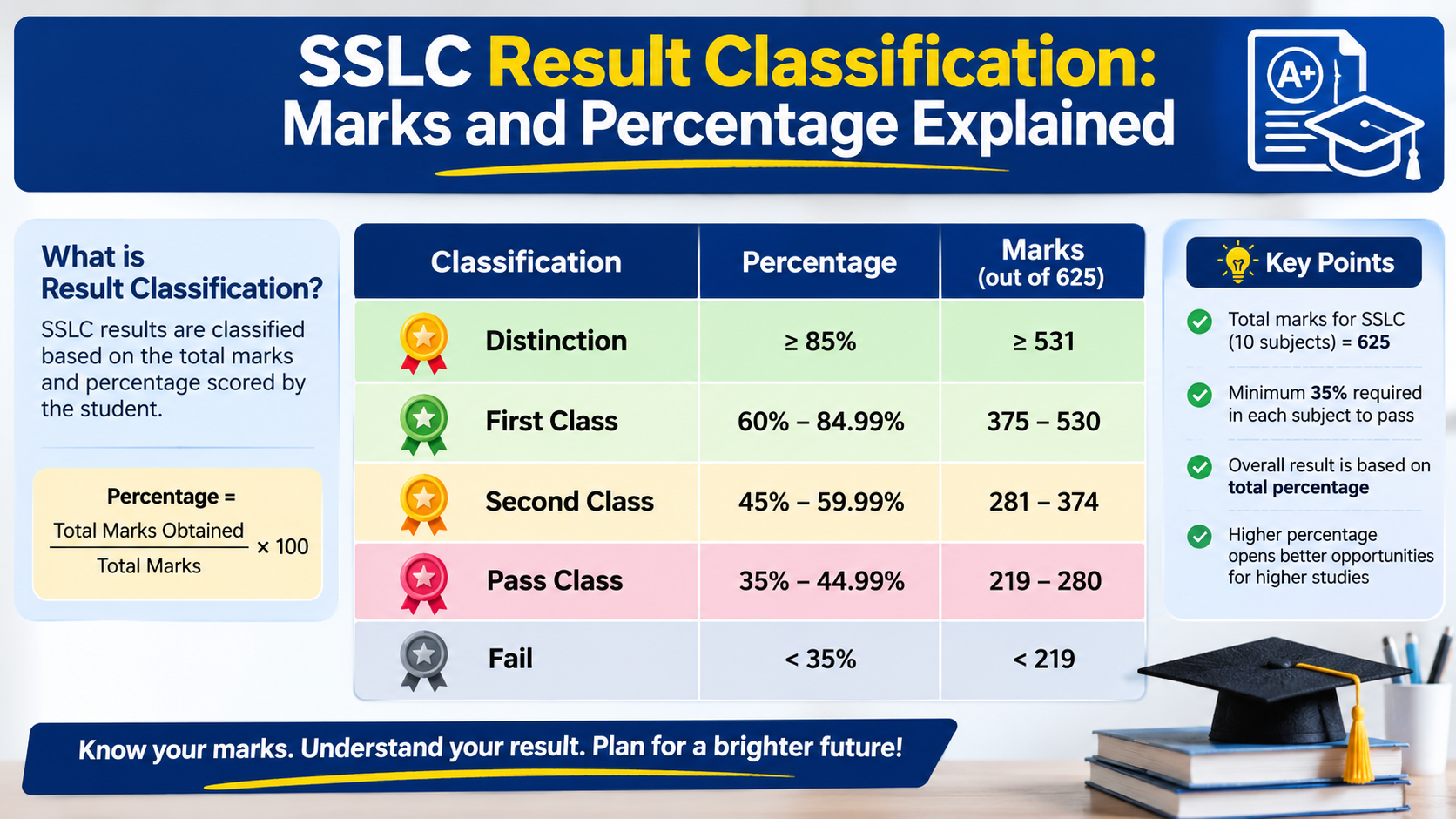
SSLC stands for Secondary School Leaving Certificate, but the term does not mean every state follows the same examination pattern. State boards decide their own curriculum, subjects, internal assessments, passing rules and marks-card format.
For instance, Tamil Nadu’s Directorate of Government Examinations publishes SSLC examinations and notifications through its official DGE portal, while Karnataka SSLC results are published through the Karnataka Examination Results portal. CBSE Class 10 is a different board system altogether and publishes subject marking schemes on its official marking-scheme page.
That means these statements can all be true at the same time:
| Situation | Correct interpretation |
|---|---|
| A student scores 600 out of 625 | Percentage is 96% |
| A student scores 600 out of 650 | Percentage is about 92.31% |
| A student scores 600 out of 700 | Percentage is about 85.71% |
| A board uses a 500-mark aggregate | A 600-mark aggregate does not apply to that format |
| An additional subject appears separately | It may not be included in the main aggregate |
The board’s official marks card, not a general internet result calculator, decides which total applies.
How to Find the Correct Maximum Marks
Before calculating a percentage or comparing results, identify the maximum marks for the exact examination.
Check the official marks card first
The most reliable place is the student’s original marks card. Look for headings such as:
- Maximum Marks
- Marks Secured
- Total
- Aggregate
- Grand Total
- Result
- Grade
- Subject-wise Performance
If the marks card shows a maximum score beside every subject, add those maximum marks only when the board has included all of those subjects in the aggregate.
Check the official result portal
If the original marks card has not yet been issued, use the board’s official result website. Avoid entering registration details on lookalike sites, apps or unofficial result pages.
For Karnataka, the official results page states that online results are for immediate information and should not be treated as the original marks sheet; the board issues original marks cards separately. The same caution appears on Tamil Nadu’s official result service.
Use only a government or board-controlled domain, such as:
karresults.nic.infor Karnataka result announcementstnresults.nic.infor Tamil Nadu result announcementscbse.gov.infor CBSE notices and services- The official website of your own state examination board
Confirm whether all subjects count
Some marks cards show more subjects than are used for the primary aggregate. Common examples include:
- An optional language
- A third language
- A vocational or skill subject
- An additional subject
- Internal assessment or practical components
- Co-scholastic grades
A subject appearing on the marks card does not automatically mean it is included in the grand total. Read the marks-card headings and board instructions carefully.
How to Calculate Percentage From 600 Marks
The standard percentage formula is:
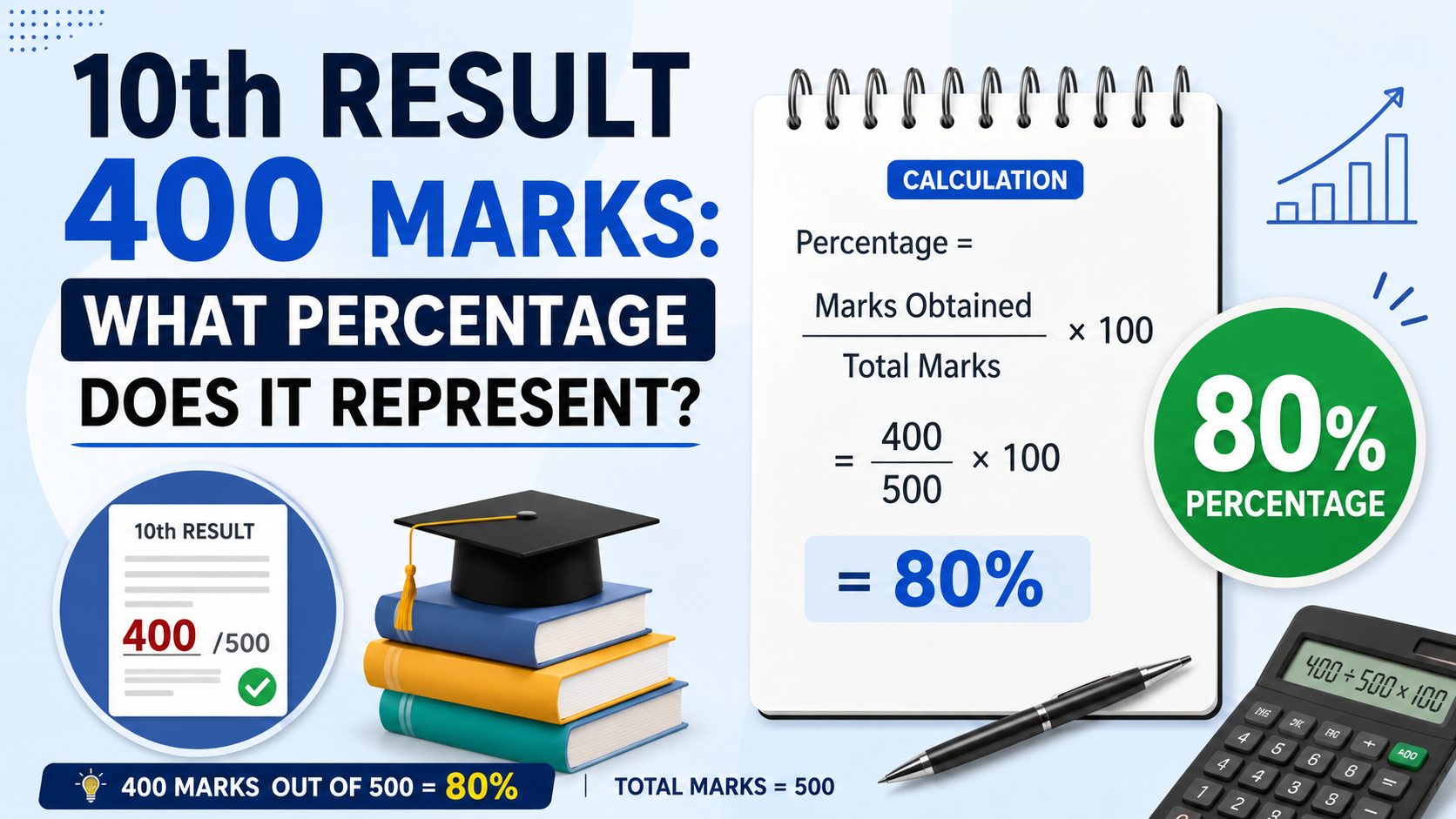
Percentage = (Marks Obtained ÷ Maximum Marks) × 100
Here are common examples for a student who scored 600 marks:
| Marks obtained | Maximum marks | Calculation | Percentage |
|---|---|---|---|
| 600 | 625 | 600 ÷ 625 × 100 | 96% |
| 600 | 650 | 600 ÷ 650 × 100 | 92.31% |
| 600 | 700 | 600 ÷ 700 × 100 | 85.71% |
| 600 | 750 | 600 ÷ 750 × 100 | 80% |
The result should be rounded only if the school, college, admission portal or board asks for a particular format. If no instruction is given, keeping two decimal places is usually clearer.
Do not use a 600-mark denominator automatically
A frequent mistake is assuming that “10th result 600 marks” means the examination is out of 600. If 600 is the student’s score rather than the maximum, dividing by 600 will incorrectly produce 100%.
For example:
- Incorrect:
600 ÷ 600 × 100 = 100% - Correct, if the exam is out of 625:
600 ÷ 625 × 100 = 96%
The maximum marks must come from the official result record.
Understanding Subject Totals, Internal Marks and Grades
A grand total is normally built from subject-wise marks, but each board’s structure can differ. A subject may contain one or more components:
| Component | What it means |
|---|---|
| Theory marks | Marks awarded in the written board examination |
| Internal assessment | Marks awarded for school-based assessment, projects or periodic work, where applicable |
| Practical marks | Marks for practical examination or laboratory work, where applicable |
| Subject total | Theory, internal and practical marks combined for that subject |
| Aggregate | Total of subjects included by the board for the final result |
| Grade | A performance band, which may be shown alongside or instead of numerical marks |
A student should not manually add marks from a screenshot unless the score format is fully clear. The board may already combine internal and theory marks in the printed subject total.
Example: checking the arithmetic
Suppose a marks card has six countable subjects:
| Subject | Marks obtained | Maximum marks |
|---|---|---|
| First language | 96 | 100 |
| Second language | 94 | 100 |
| Mathematics | 100 | 100 |
| Science | 98 | 100 |
| Social Science | 97 | 100 |
| Additional/board-defined subject | 115 | 125 |
| Total | 600 | 625 |
In this example, the score is 600 out of 625, or 96%. However, this is only an illustration. Your board may use a different number of subjects, different maximum marks or a different treatment of the additional subject.
How to Read Pass Status Correctly
A high total does not replace the board’s subject-wise passing requirements. A student may need to meet minimum marks in specific subjects, practical components or internal assessments, depending on board rules.
When reading the result, check all of the following:
- Is the overall result marked “Pass,” “Qualified” or its board-specific equivalent?
- Is a subject marked absent, withheld, failed or compartmental?
- Does the marks card list a grade instead of marks for any subject?
- Are there separate practical or internal components?
- Has the board marked an additional subject separately from the aggregate?
- Is the result from the main examination, supplementary examination, revaluation or an improvement attempt?
Do not interpret a high aggregate as final proof of eligibility for a particular course. Admission authorities may use their own requirements, such as subject-specific minimum marks or a best-of-subjects calculation.
How to Check and Preserve Your SSLC Result Safely
Follow this practical process after results are declared:
- Go to your board’s official result website.
- Enter only the required registration number, date of birth or other official credentials.
- Compare the online subject marks with your school record or hall-ticket details.
- Download or print the provisional result if the portal provides that option.
- Collect the original marks card or certificate through the school or the board’s prescribed process.
- Keep clear digital copies for admissions, scholarships and document verification.
- If you notice a possible error, use only the board’s official retotaling, scanned-copy, scrutiny or revaluation process.
Tamil Nadu’s DGE, for example, publishes SSLC notifications for post-result services on its official SSLC notification page. Procedures, timelines and eligibility can change by examination session, so students should follow the current board notice rather than old articles or videos.
Important Warnings When Comparing 10th Results
Comparing raw marks without comparing the maximum total can create misleading conclusions.
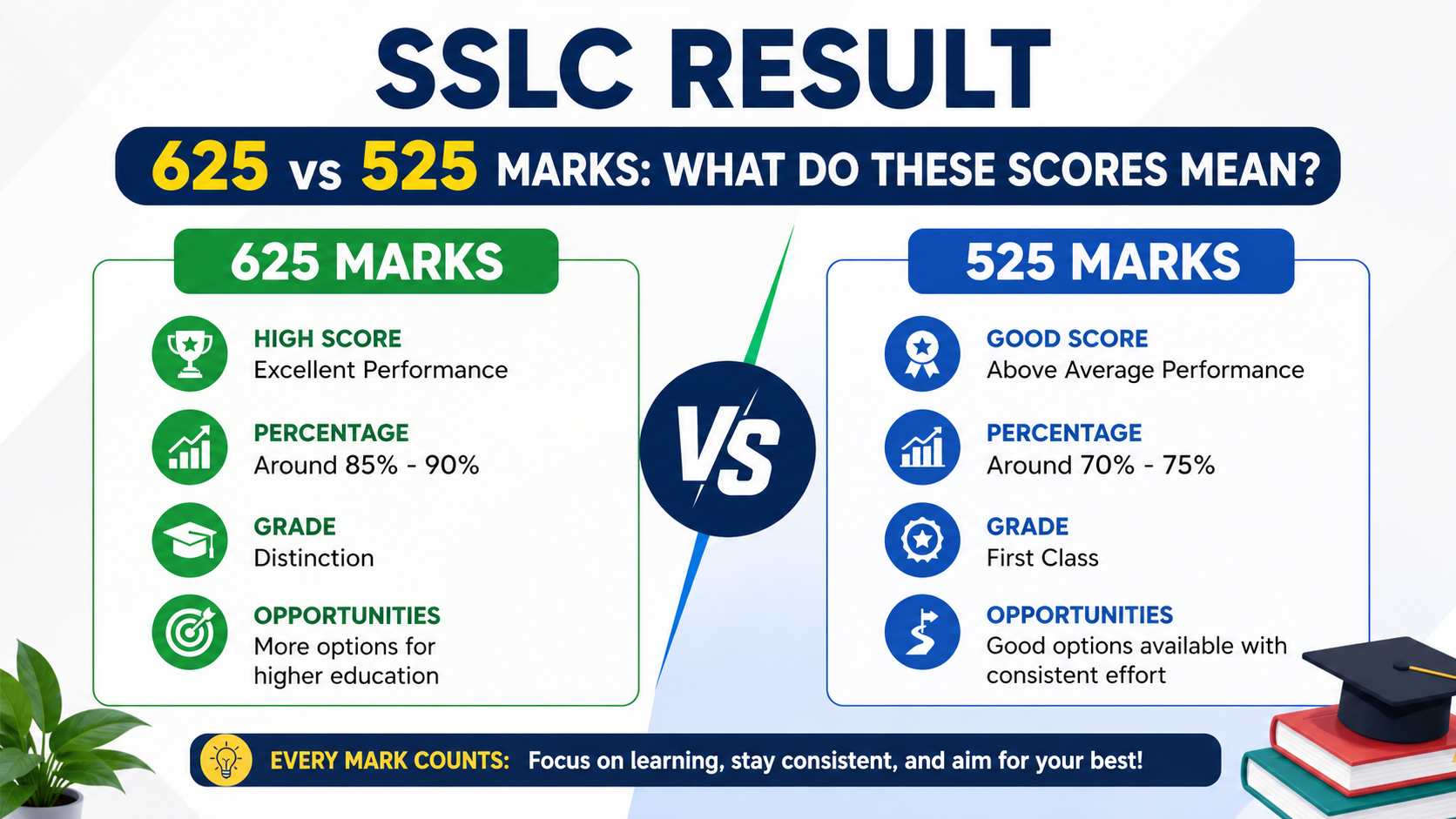
A student with 600 out of 625 has a higher percentage than a student with 600 out of 700, even though both have the same marks obtained. Similarly, a percentage may not be directly comparable when boards use different subject combinations, grading systems or assessment structures.
Be especially careful about these mistakes:
- Treating a score out of 625, 650 or 700 as if it were out of 600
- Including an additional subject that the board excludes from the aggregate
- Ignoring practical or internal marks
- Using a historic marks pattern for a current-year result
- Trusting an unofficial result link or edited screenshot
- Assuming a percentage conversion is accepted by every college or scholarship scheme
For admissions, use the exact aggregate and percentage requested in the application form. If the institution asks for “best five subjects,” “main subjects” or a board-issued percentage, follow that wording precisely.
Frequently Asked Questions
Is 600 marks good in the 10th SSLC result?
Yes, 600 marks can be an outstanding score, but its exact value depends on the maximum marks. It is 96% out of 625, about 92.31% out of 650, and about 85.71% out of 700.
Is every SSLC result out of 600 marks?
No. SSLC examination patterns differ by state board and can also change over time. Always use the maximum total shown on the official marks card or specified by your board for that examination year.
How do I calculate 600 out of 625 percentage?
Divide 600 by 625 and multiply by 100:
600 ÷ 625 × 100 = 96%
Should I add marks from all subjects on my marks card?
Only if the board includes all of those subjects in the aggregate. Optional, additional, vocational or graded subjects may appear separately and may not count towards the main total.
Is the online SSLC result the original marks card?
Usually no. Official result portals commonly describe online results as provisional or for immediate information. Collect and preserve the original marks card issued through your school or board.
Conclusion
The correct way to understand a 10th result 600 marks is to identify the official maximum marks first. A score of 600 may represent 96%, 92.31%, 85.71% or another percentage depending on the board’s prescribed total.
Read the subject-wise marks, confirm which subjects count in the aggregate, calculate the percentage using the official maximum, and use only your board’s authorised portal and marks card for admissions or document verification.